
Brooklyn Bridge parkrun
A community 5K up and running in the shadow of a New York icon

New York City is a lighthouse unto the nations that draws more powerfully than it warns off. For those who choose to live there, in New York City lies opportunity, glamour, promise but also peril. And for the millions who live there, and those who visit each year, the city has added a parkrun1 in the Saturday morning shadow of the iconic Brooklyn Bridge — as if this city wanted another tourist landmark or event.
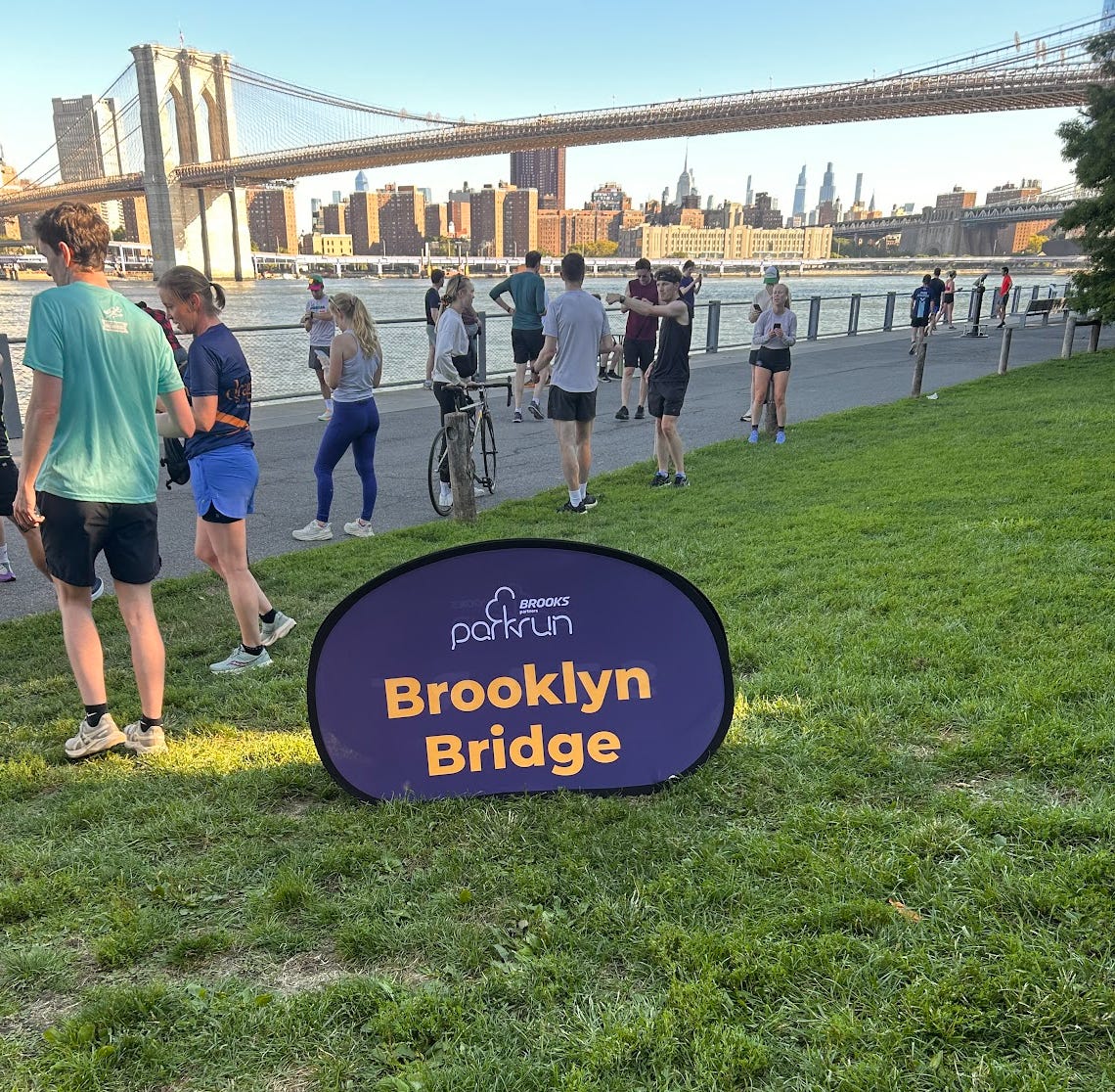
The Brooklyn Bridge parkrun and my getting there is what I am writing about today.
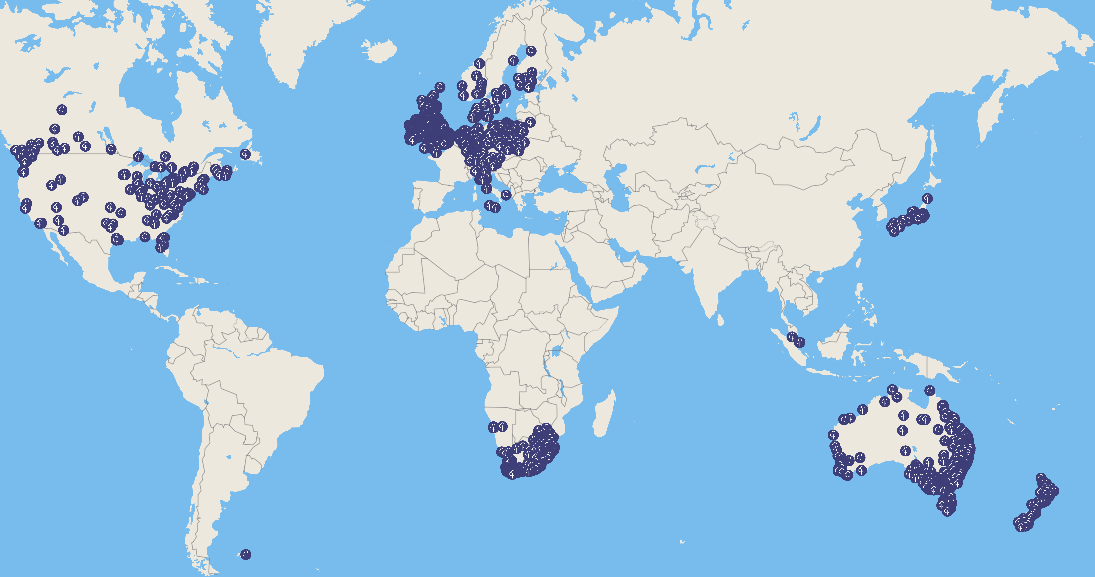
On the Labor Day weekend Friday evening this summer, I found myself in White Plains, New York, puzzling over how I might take part in the parkrun at Pier 1 in Brooklyn on Furman Street. Parkruns are volunteer staffed and timed 5K races that happen around the world in parks on Saturday mornings, more so in Anglophone countries.
On the same weekend, the US Open tennis tournament was well underway at Flushing Meadows in Queens (it was eventually won by Carlos Alcaraz for men, and Aryna Sabalenka for women). The fact of the tournament going on I understood from the media, and it is not a real revelation to say that the US Open is only one of many large world-class events that take place in parallel in New York City without a wrinkle to proceedings for the uninterested citizens.
On the day of the men’s US Open tennis final, September 7th, the 2025 MTV Video Music Awards took place at the UBS Arena in Elmont, New York; after swapping starting quarterbacks in the offseason, the Pittsburgh Steelers beat the New York Jets in the Meadowlands across the Hudson; and in Times Square there was a free live concert of performances from 23 celebrated Broadway shows including The Lion King, Mamma Mia!, and Wicked — if you were to plan a party with thousands, or even hundreds of thousands of guests, with a sprinkling of celebrities thrown in, without neighbors catching on, New York City would be the place to do it.
The parkrun I looked up when I found out I would be in metro New York City. Too small an event, it was neither in the media nor something that I knew existed in New York City from prior visits.
But I had to get there first.
Many phenomena happen in our lives that we don’t pay attention to, or if we notice them at all, they register as background noise. The surge pricing of hail-a-ride apps is one such phenomenon for me.
In White Plains, I had no car available to me, yet a car would have come with the attendant headache of finding parking in New York City. Via subway, the trip was at least 2 hours one way — it seemed too much hassle for a less than 24 minute run, even in such a singular setting. If I could stand the cost, the most sensible transport was a hail-a-ride app with Uber or Lyft.
Because I don’t use ride-hailing apps often, I was unprepared for their availability and demand driven variable pricing — surge pricing they call it. I am not ignorant of such shifts in prices in the app driven modern economy. I had read about such practices, and seen it in my prior use of Lyft. (If you are particular enough and care about these differences, you are either a Coke or Pepsi, Nike or Adidas, Apple or Microsoft, Stones or Beatles, Messi or Ronaldo person, and likewise an Uber or a Lyft person. I am a Lyft person.)
And in my past use of the Lyft app, I had experienced only small shifts in price; in metro New York City price variations seemed large, but then I was in the largest city in the USA, and I needed to travel 30 miles.
Overall, I paid about $2.90 per mile for the Lyft Standard fare. New York State and New York City tack on additional fees on the fare:
New York State Surcharge
Black Car Fund Surcharge
Congestion Surcharge
On the way back out of the city proper:
New York Sales Tax
Black Fund Surcharge
Congestion Surcharge
For comparison, in Minneapolis I paid $1.80 per mile for the same trim of ride to travel 17 miles to another parkrun at the beginning of the summer in June. Nothing tacked on to the Lyft Standard fare in going or traveling back.
The price changes in New York City in themselves didn’t surprise me. It was the amount of the changes that gave me pause. Perhaps New Yorkers are desensitized to paying $100 for a routine trip, but I live in Richmond, Virginia, probably the most mellow big city in the mid Atlantic. Realtime price inflation happening before my eyes isn’t built into my psyche as a fact of life.
Late that Friday night I refreshed the Lyft app for the umpteenth time hoping for a fare reasonable to my mind — my mind didn’t see anything reasonable. I became dubious of my prospects to run Saturday morning. However, at 6:30am the following morning, the fares had come down significantly, by almost half, and cleverly displayed with green text. Green means go! — the tech girls and boys have not lost the lessons of their childhood.
The lower fares were my cue to irreversibly commit to going to the parkrun, but I made a mistake. Not wanting my ride to arrive before I was ready, I waited to be dressed before locking in my ride. And being in a house full of sleeping people, I moved purposely but carefully.
By the time I was dressed, the prices had gone back up to what they were the previous night. Now fully attired in my runner’s uniform, I was past the point of return — let the cost fall where it may. I locked in my ride.
It showed up as a sleek clean burgundy Honda-CRV hybrid trailing the futuristic alien spacecraft high-pitched hum of its engine. It was driven by possibly the most considerate taxi driver I have ever shared a car with. I could tell he was an immigrant like myself. When he spoke on the phone, it was barely above a whisper — his barely audible voice, and his intent, reminded me of someone tip-toeing around a colicky baby. At one point, hit by a sudden phantom spasm of coughing, he seemed to simultaneously cup his mouth, open the sunroof and apologize. It was a marvelous show of reflexes and presence of mind. Something I appreciated.
I suppose the option in ride-share apps to rate drivers on a number of parameters with up to five stars has gone some way to smoothing the taxi riding experience for the customer and, perhaps, for the driver. The price and destination are locked in from the start. It is left to the algorithm to decipher the most efficient route to get to the destination. The only thing required of the passenger and driver is to be at their most pleasant to each other.
Other than the cough, it was an uneventful ride. I dropped off at the corner where Old Fulton St turns to become Furman Street; in plenty of time to be at the start line.
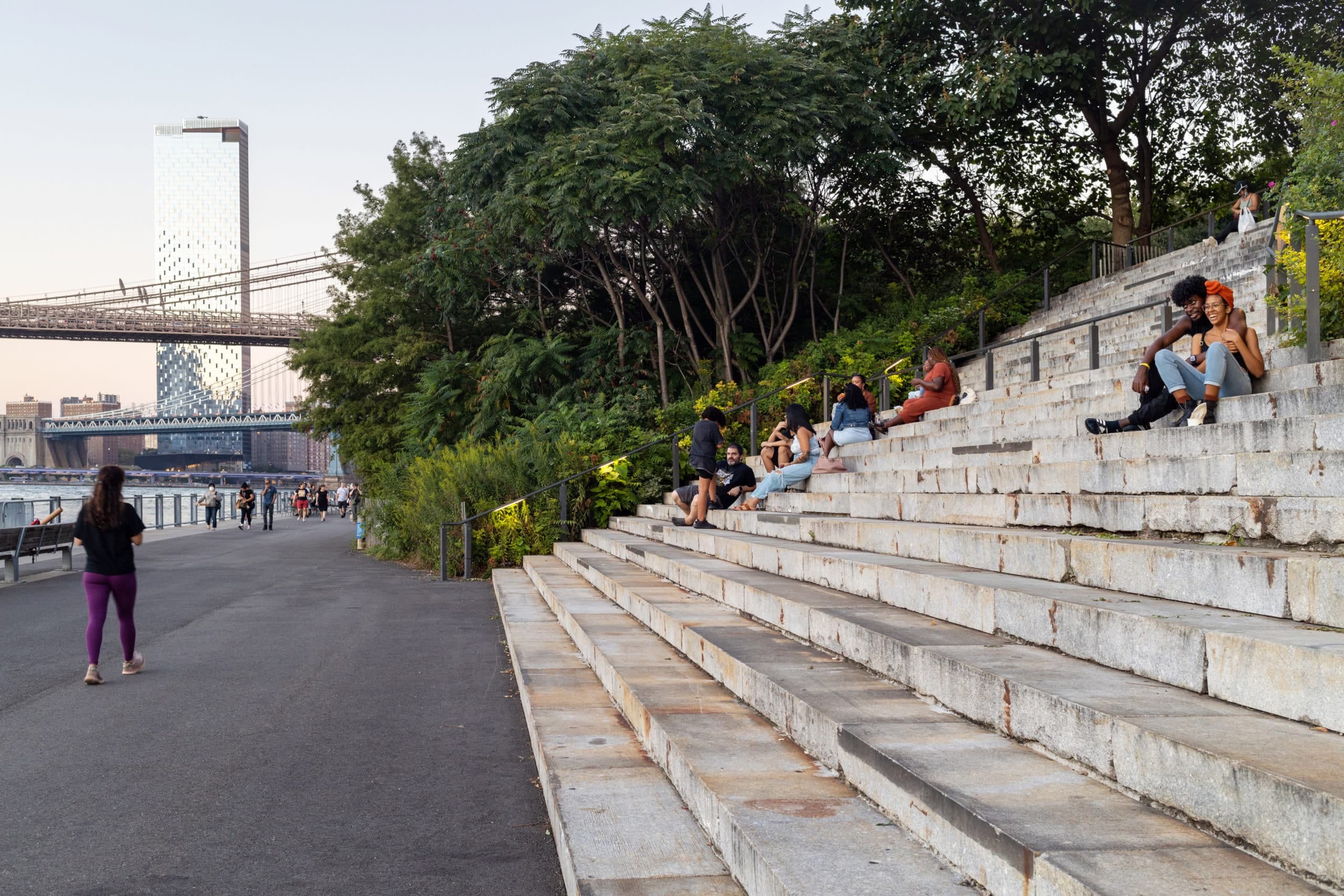
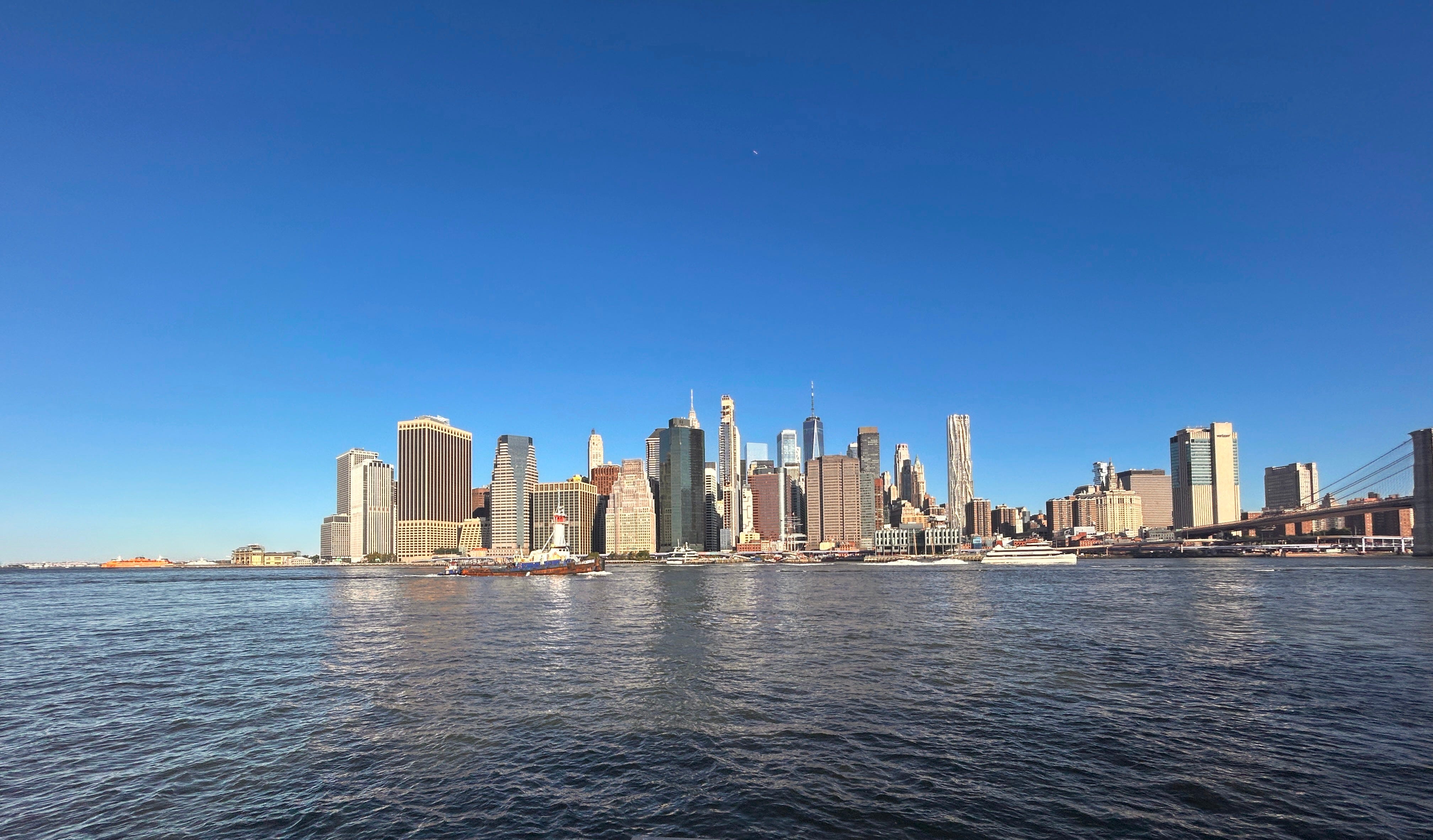
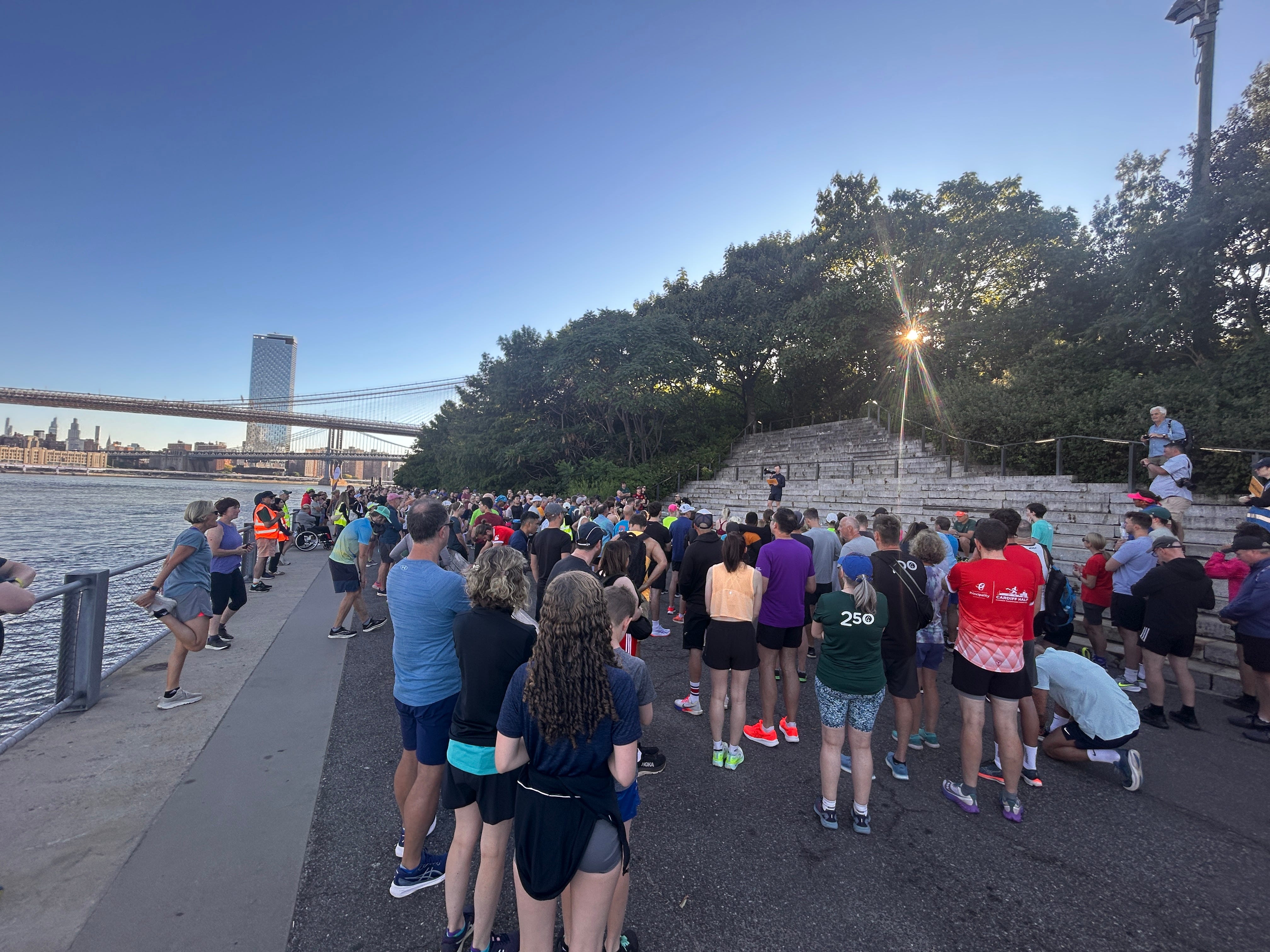
With the Brooklyn Bridge and the Financial District of Lower Manhattan for backdrops, I milled around Brooklyn Bridge Park on Pier 1, making my way to the largest of gatherings of runners by a set of steps on the East River side of the park; I later found out the set of steps, “salvaged from the Roosevelt Island Bridge reconstruction,” are called The Granite Prospect.
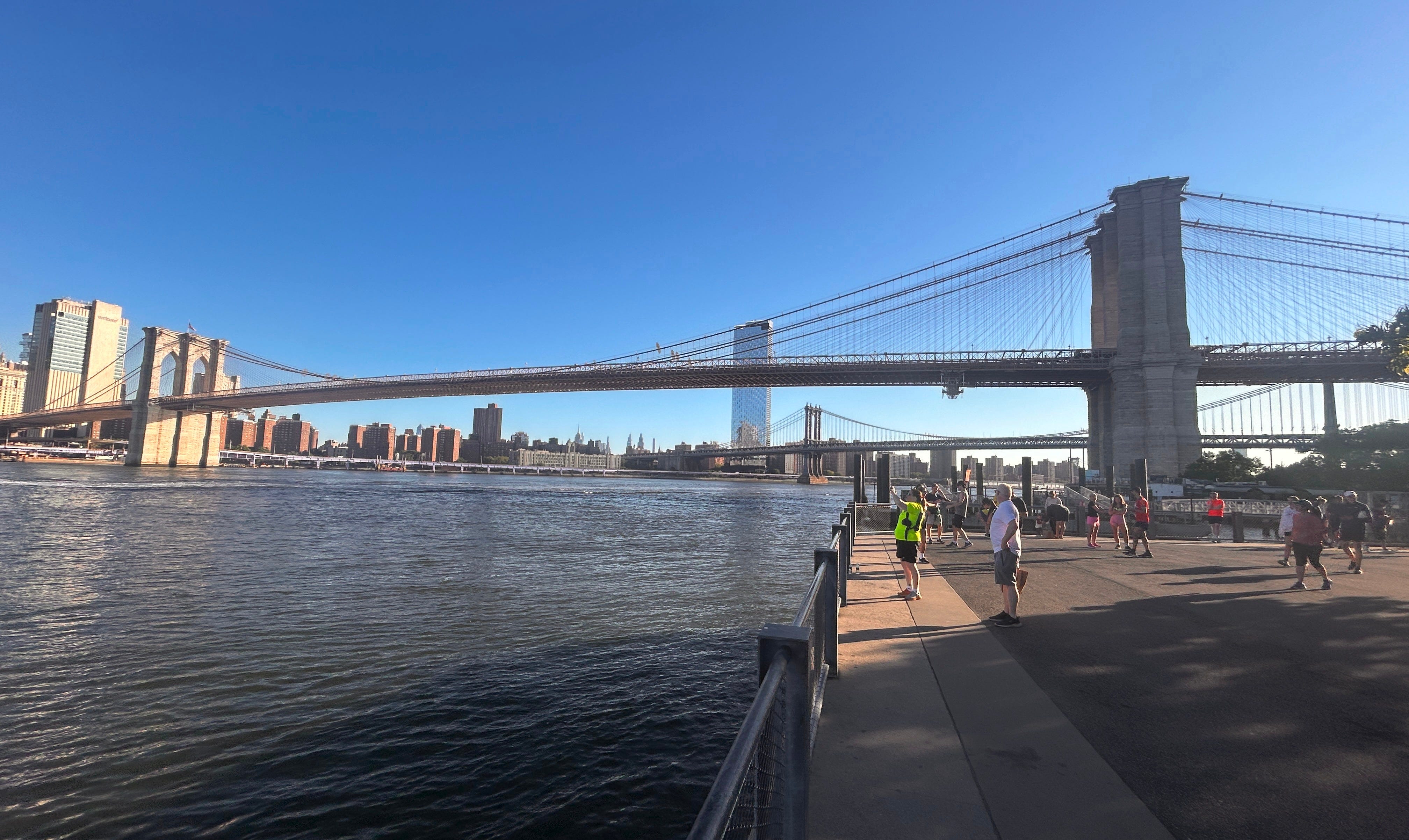
I heard right away, and apropos for parkrun, the very British accents of the organizers in yellow hi-viz vests — parkrun being of British origin. Among runners too, there were not a few accents from the British isles and the sister countries Australia and New Zealand.
Not that I could say precisely which country the runners in the conversation I overheard hail from, but I was certain they didn’t sound like Joe Pesci’s Vinny Gambini in My Cousin Vinny, or Jeff Bridges The Dude in The Big Lebowski nor like Dolly Parton asking Conan O’Brien on Late Night with Conan O’Brien if he would like to help her with her double breasted suit. And I saw a couple in running shirts that said, “Auckland Joggers,” and a man with a shirt that said, “Cardiff Half-Marathon,” and many other shirts of that nature — fellow travelers from across the “ponds”.
There were locals too, and I imagined that some of these nondescript ladies and gentlemen in funny running shorts and shoes sat in the sky scrappers behind us across the East River in Manhattan and had a hand in the daily kinetic gyrations of our 401Ks and portfolios.
As things would have it, this was only the second running of the Brooklyn Bridge parkrun. The inaugural event had taken place seven days prior with 538 runners taking part; the second had 382 runners — I had stumbled on the inception of an instance of parkrun. It felt special.
Whereas the UK is covered with parkruns like warts, parkruns in the USA are few and far between, a thing of some consternation to me.


In a city where it seems one can find anything and everything, a city with limitless variety, it was a surprising omission for there to be no parkrun.
Parkrun is enough of a movement that people travel across oceans to take part in some of them — checking off a long bucket list. It does not hurt that some parkruns are in such scenic settings as is the case for the Brooklyn Bridge parkrun. New York City will become even more of a draw for parkrunners now that it has one of its own up and running.
When all my costs are considered, this was probably the most pricey 5K I have ever been a part of; and it is up there for the number of 90 degree turns for a short race (16 total). But it was worth it.
This is stuff my dreams as a boy could not have conjured — running with Manhattan for a backdrop. This late summer Saturday felt just right.
When a place offers something interesting that gets you out of bed early in the morning, on a day of rest, that place is home; New York City is starting to feel like home.
Parkrun is stylized with a lower case ‘p’ by the founders of parkrun. I have not followed that convention when the word is at the beginning of a sentence.
Nice !! it all worked out 🏃🏾♀️